Source Insulation Cup Head Pins for Shipbuilding, Construction, and Insulation
Compare 24 insulation cup head pins from verified suppliers in China. Buyers can review specifications like shank diameter, head size, and surface treatments for shipbuilding, construction, and general insulation applications; compare the available evidence and request quotations based on your requirements.
Key considerations
Products List


Comprehensive Sourcing Guide
Insulation Cup Head Pins Sourcing Guide
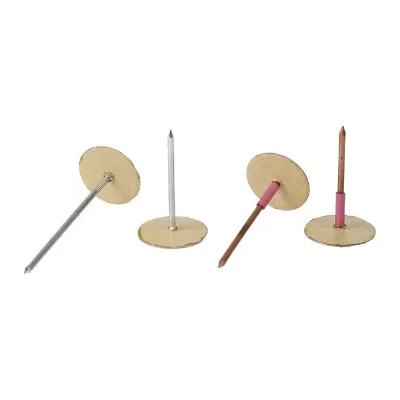
Procurement professionals must first distinguish between general insulation pins and specialized cup head quick release variants, as the supplied data reveals distinct product families under this keyword. While some listings describe decorative nails or standard insulation pins for shipbuilding, others explicitly identify cup head designs intended for quick release applications with specific ball mechanisms. Buyers should verify that the supplier's catalog clearly separates these functional types to ensure the selected component matches the intended mechanical load and release requirements of the project.
The observed market signals indicate a wide variance in customization capabilities, with some suppliers offering fully tailored dimensions while others provide non-customized standard sizes. This distinction is critical because insulation pins often require precise shank and head diameters to fit specific thermal or structural gaps. Sourcing teams must confirm whether the supplier can accommodate custom drawings for head diameters ranging from 14.5mm to 250mm or if they are limited to fixed standard sizes, as this directly impacts the feasibility of the component in specialized insulation assemblies.
Product Scope and Observed Listing Signals
Buyers should analyze the material composition carefully, as the market offers both stainless steel and mild steel options for these components. The presence of copper, polished, or zinc coatings suggests different environmental resistance profiles, which is vital for applications in shipbuilding or outdoor construction where corrosion is a primary concern. Procurement teams must match the raw material grade, such as Grade A stainless steel, to the specific operational environment to prevent premature failure due to oxidation or chemical degradation in harsh conditions.
Listing signals also reveal significant diversity in packaging and delivery timelines, ranging from simple plastic bags to complex palletized cartons with specific weight limits. Some suppliers offer rapid delivery windows of 7 to 15 workdays, while others require 25 to 30 workdays for customized orders. This variance necessitates a clear assessment of project schedules, as the lead time for custom-drawn cup head pins may significantly delay installation if not accounted for in the initial procurement timeline.
Technical Specifications to Verify
Verification of dimensional tolerances is paramount, as the supplied data indicates a standard tolerance of +/-0.10mm for precision components. Buyers must confirm that the shank diameter, which can be 1.8mm or 2.7mm, aligns with the hole specifications of the insulation material being used. Any deviation in these critical dimensions can compromise the structural integrity of the insulation system, making it essential to request detailed dimensional drawings before finalizing the order.
The head geometry and finish must also be scrutinized to ensure compatibility with the installation tooling and aesthetic requirements. Listings describe both button heads and cup heads, with finishes ranging from clean electroplating to plain surfaces. Procurement teams should verify that the selected head type, such as the cup head for quick release shoulder ball pins, matches the mechanical release mechanism required, and that the surface treatment provides the necessary friction or smoothness for the specific application.
Compliance and Safety Documentation
Compliance verification requires checking for recognized certifications such as ISO, CE, and SGS, which are frequently cited in the product listings. These documents serve as evidence that the manufacturing process adheres to international quality and safety standards, which is particularly important for projects in regulated industries like shipbuilding or construction. Buyers should request current certification copies to ensure the supplier maintains active compliance status rather than relying on expired or generic claims.
Safety documentation must also address material safety and environmental standards, including RoHS compliance where applicable. The presence of specific standards like ISO13918, ANSI/Aws D1.1, and JIS B1198 indicates that the pins meet specific industry benchmarks for welding and structural integrity. Procurement teams must ensure that the supplier can provide test reports or certificates confirming that the raw materials and finished products meet these rigorous standards before shipment.
Cost Drivers and Commercial Terms
Cost structures are heavily influenced by the level of customization required, with non-customized items generally commanding lower prices than those made to specific drawings. The observed price range of 0.01 to 9.23 USD reflects this variability, but buyers must look beyond unit price to understand the total cost of ownership, including tooling fees for custom molds or setups. Understanding these cost drivers helps in budgeting accurately for large-scale projects where minor design changes can significantly impact the final invoice.
Commercial terms regarding payment and minimum order quantities (MOQ) are equally critical for financial planning. Listings indicate an MOQ range from 100 to 100,000 units, with payment terms often requiring a 40% deposit via T/T. Buyers should negotiate these terms based on order volume and relationship history, ensuring that the deposit structure does not create undue cash flow pressure while securing the supplier's commitment to the production schedule.
Supplier Qualification and Quality Control
Supplier qualification should focus on their manufacturing location and origin, with many listings pointing to Tianjin, China, as a primary production hub. This geographic concentration often implies a mature supply chain for metal fasteners, but buyers must verify the specific factory's capacity to handle their order volume and quality expectations. Establishing a direct relationship with the manufacturing facility rather than a trading company can provide better visibility into the production process and quality control measures.
Quality control protocols must be explicitly defined, including inspection methods for surface treatments and dimensional accuracy. The data mentions processes like electroplating and riveting, which require strict monitoring to prevent defects. Buyers should request a quality assurance plan that outlines how the supplier inspects the ball mechanism, head diameter, and coating thickness to ensure every batch meets the specified tolerance and performance criteria before leaving the factory.
Long-Term Procurement Checks
Long-term procurement success depends on establishing a reliable supply chain that can adapt to changing project requirements over time. Buyers should assess the supplier's ability to maintain consistent quality across multiple production runs, especially when dealing with custom specifications that may evolve. Building a partnership based on clear communication and shared quality standards ensures that future orders can be fulfilled efficiently without compromising on the technical integrity of the insulation pins.
Continuous monitoring of supplier performance is essential to mitigate risks associated with lead times and material availability. Regular audits of the supplier's certification status and adherence to standards like ISO and GB/T 10433 help maintain high procurement standards. By maintaining a proactive approach to supplier management, buyers can ensure a steady supply of high-quality cup head pins that meet the evolving demands of their insulation and construction projects.
FAQs
What materials are used for insulation cup head pins?
Insulation cup head pins are typically manufactured from mild steel or stainless steel. These raw materials provide the necessary structural integrity and corrosion resistance for shipbuilding and construction applications. The choice between mild steel and stainless steel depends on the specific environmental conditions and durability requirements of the installation project.
Can insulation pins be customized to specific sizes?
Yes, customization is available for insulation pins. Manufacturers offer shank diameters of 1.8mm or 2.7mm, and head diameters ranging from 14.5mm to 250mm. These dimensions can be adjusted according to customer requirements or specific drawings, ensuring the pins fit precisely into various insulation systems and structural designs.
What certifications do insulation pins typically hold?
Insulation pins commonly hold ISO, CE, and SGS certifications. These credentials verify that the products meet international quality and safety standards. Some manufacturers also provide RoHS and GS certifications, ensuring compliance with environmental and regulatory requirements for industrial applications in shipbuilding, construction, and other specialized insulation sectors.
How are insulation pins packaged for shipment?
Insulation pins are packaged in plastic bags and outer carton boxes for standard orders. For larger quantities, they are packed in cartons of 25 to 30 kilograms and then palletized. This packaging method protects the pins from damage during transit and ensures efficient handling and storage at the destination site.
What is the typical lead time for insulation pins?
The delivery time for insulation pins generally ranges from 7 to 30 workdays. Standard items may be delivered within 7 to 15 workdays, while customized orders or larger quantities can take 25 to 30 workdays. This timeline accounts for manufacturing, quality control, and logistics preparation based on order specifics.
What surface treatments are applied to insulation pins?
Insulation pins undergo various surface treatments including copper coating, polishing, zinc plating, and electroplating. These finishes enhance corrosion resistance and aesthetic appeal. The specific treatment depends on the material grade and the intended application environment, ensuring long-term durability and performance in harsh industrial conditions.